


Research and publish the best content.
Get Started for FREE
Sign up with Facebook Sign up with X
I don't have a Facebook or a X account
Already have an account: Login

Internet Marketing Strategy 2.0
177.7K views |
+3 today
Bottom-up, consumer-centered online marketing strategy news
Curated by
Robin Good
 Your new post is loading...
 Your new post is loading...
Your new post is loading...
 Scoop.it!
Robin Good's insight:
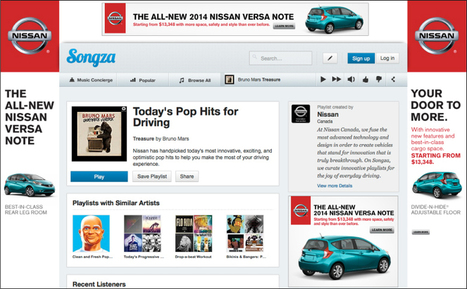
While they may cost a few thousand dollars if commisioned through an agency, curated music playlist appear to be an emerging approach for big brands to develop a closer relationship with their fans. From Nissan, to Juicy Fruit, Telus and Mr. Clean, there are already several large brands who have been investing in compiling dedicated music playlists to engage and stay in contact with their customers and potential ones for hours at a time. Songza (available only in the US and Canada) is one of the pioneering music distribution platforms monetizing this approach. My comment: DJs and music experts may have yet to witness the opportunity to become fully part of the communication and marketing process of big brands by curating all of their marketing-related music needs. Check out this article to learn more about it: http://www.6smarketing.com/blog/songza/ 

Richard Stadler's curator insight,
August 23, 2013 3:51 AM
Another innovative way to reach your market...
Scoop.it!
Robin Good's insight:
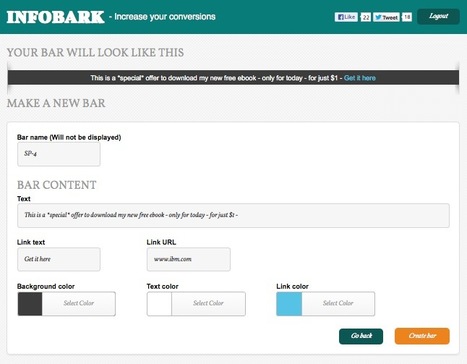
InfoBark is a web app which makes it extremely easy to create simple horizontal bars that contain a specific text, offer, or clickable call to action and which can be instantly embedded ad published inside any web site, article or post. Infobark allows you to fully customize the text, colors and background of the "information bar" you are going to create and lets you save and create more than one bar. Infobark also tracks impressions, clicks and conversion rates allowing you to monitor its effectiveness in real-time. Free to use. Try out now: http://www.infobark.com/

Susan Velez's comment,
September 28, 2013 10:48 AM
I've seen several people using these bars...I guess I can see why. Thanks
Scoop.it!
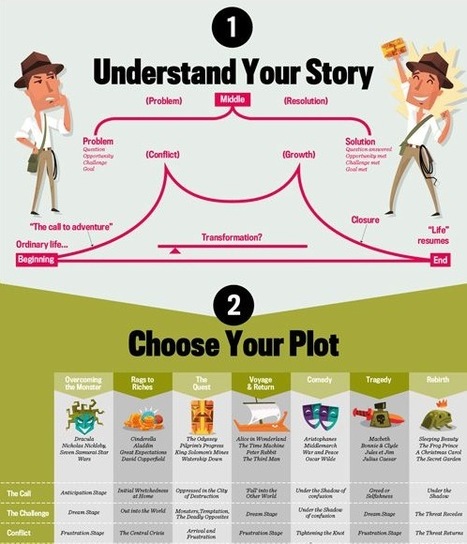
From structure and plot to heroes and characters, your story must have everything in place if it's to connect with the reader. Follow our guide to storytelling success.
Robin Good's insight:
Thanks to the Content Marketing Association for having created and published this useful visual poster which highlights the key elements, needed to develop your own stories. The poster covers seven key areas, but offers the greatest value in: 1) defining for you seven popular type of plots. 2) identifying seven types of heros present in story plots 3) listing the main type of characters that can be used in an effective story My comment: By reading through this visual poster you can definitely familiarize yourself more with key variables a play in any great plot, have some references of classic novels, plays and films that represent the different type of plots that you can use, and get a much better grip with the variables you can utilize to create an effective story plot. (Thanks to the Digital Rocking Chair for having found this gem)

Almudena Cano's curator insight,
July 23, 2013 4:06 AM
Útil y visual guía para desarrollar una perfecta historia para nuestra marca. Creada por la Content Marketing Association. 
Mayer Becker's curator insight,
July 30, 2013 4:06 PM
Marketing Ops is called on to develop strategic and tactical plans on behalf of the marketing department. Being able to tell a story is vitally important to this process. Here is a good infographic about building the "story." 
Verónica Sánchez's curator insight,
August 2, 2013 8:05 PM
Tenemos muchas historias que contar y lograr que quien las escuche realmente se conecte, no sólo depende del contenido de la historia, sino de la forma cómo la cuentas, aquí algunos pasos del storytelling
Scoop.it!
Robin Good's insight:
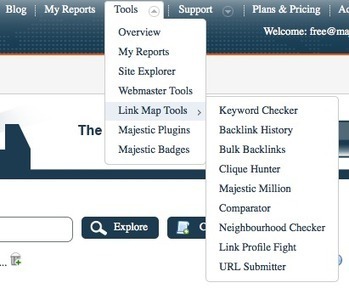
If you want to monitor new inbound links to your site, including their value, linking date, anchor text and more Majestic SEO has introduced recently a free-for-all service that any owner of a verified domain can use on his own site. With SEOMajestic you can also see where there are new broken links on your site. At times these happen just because the page you are linking to on another site has reorganized and its page addresses have alla changed. To access this free service you need to verify your own site either by including a text snippet in your home page meta tags or via Google Authentication. The PRO version, simply extends the powerful capabilities offered by SEOMajestic to the service of analyzing the link profile of any web site. Not just yours. More info: http://blog.majesticseo.com/development/site-explorer-goes-free/ Sign-up + try: https://www.majesticseo.com/account/register Home: http://majesticseo.com/

sophiedesc's curator insight,
July 7, 2013 7:35 AM
"Site Explorer lets you: -See your strongest links at a glance – with Crawl dates, Flow Metrics and anchor text. -Lets you see New Links and Lost links in easy to drill down charts with data being updated all the time. -Have an easy way to see a list of your referring domains -A geographical and visual map of where in the world your top 1000 referring domains are hosted -A clear break down of your anchor text with EASY drill down to see the exact links you have for any given anchor text."
Scoop.it!
Robin Good's insight:
Chris Spooner has some good and well-illustrated advice on how to effectively use sign-up forms on your web site. If your subscribers are lagging behind you will find here some practical advice on how to improve immediately on this front. You may need a little graphic design help, but the author himself could be a resource if he did what he has so clearly illustrated in this article. Little details make a lot of difference. Useful. Illustrated 8/10 Full article: http://line25.com/articles/how-i-increased-my-subscriber-rate-by-10x-overnight
Scoop.it!
Robin Good's insight:
My personal belief is this: in the near future, if you want to stand out in your niche, get a serious following of passionate fans and build a strong credibility for yourself, you will need to do something better than just writing blog posts (however good they may be). "Recently Martin Laetsch, Act-On’s Director of Online Marketing, presented a webinar covering the 10 most important rules for successful search engine optimization.Not all of them are 100% new, but they’re all critical keys to success. ...You can catch up with the whole on-demand session here." In this article the focus is specifically on rule n.1: Create content with your audience in mind. Rekha Mohan writes: "The main point to all this is: create content people want to share. People like sharing interesting information; it builds credibility, creating the image that the sharer is in the know, and consistently sharing good information increases your audience. Good information also helps visitors and increases your authority on a subject – use white papers, case studies, fun facts, educational material, research results, thought-provoking blog posts, how-to articles, top 10 lists, and more to share your information in innovative and easy-to-read ways." Very good reminders for anyone having doubts about what's best to do in the near future, to gain extra visibility and reputation, on any content web site. Rightful. 7/10 Full article: http://www.business2community.com/seo/the-10-new-rules-for-seo-0518641

Paola Caballer's curator insight,
June 17, 2013 5:41 PM
Escribir pensando en el SEO. Esto es lo que propone este artículo que a más de uno nos da respuestas a la pregunta ¿Por qué ya no tengo tantas visitas en el blog?
Básicamente:
- Elegir una frase CLAVE en el post, que incluyamos al menos 3 o 4 veces a lo largo del mismo. - Escribirlas con las mismas palabras, en el mismo orden. - Escribir en una extensión de 300 palabras aprox. - Colocar las palabras -etiquetas en: - El título del post - La dirección URL - Los títulos y subtítulos de los párrafos - Los links - Por supuesto, el cuerpo general del texto, de arriba a abajo.
Ni que decir tiene, que hay poner cuidado en el contenido de calidad, que al final, si no es bueno, nadie lo lee, ni pulsa los links que contiene, y lo más importante: no lo comparten, porque no llegan al final del mismo, donde, seguramente, tengas los iconos para compartir. Menciona a gente guay, con links a su Fb, Twitter... Seguro que a ellos también les gusta salir en tu post, y te ayudarán con la difusión.
A este respecto: no te olvides de las Redes Sociales, que son fundamentales para conseguir mayor viralidad.
Siempre está bien recordar estos tips de cuando en vez ;)
Scoop.it!
Robin Good's insight:
Typeform is a new web app which allows you to easily edit, create and publish professionally-looking interactive forms and surveys on any website, while guaranteeing full compatibility with all desktop and mobile devices. If you want to "listen" to your fans, customers and readers, this is a great tool to make it all happen. As a matter of fact, Typeforms work across all computing devices: from desktop PCs, to tablets and smartphones and can include all types of questions, from yes/no to multiple choice to free form answer. There is even a "Dropdown question type" which allows you to add as many options you want to this customizable drop down menu. To create a new interactive questionnaire, input form or survey, you only need to drag and drop, your selected type of questions onto your empty form canvas. Other key features include the ability to embed any newly created form or survey onto any website or blog. It is also possible to personalize typeforms by passing data into your typeforms and by appending variables to the URL. Great for greeting your users by their first name or passing hidden data along to your results. Free to use. Find out more: https://www.typeform.com/
FAQ: http://support.typeform.com/ Sign-up for the beta: https://www.typeform.com/signup/public-beta/en/
Scoop.it!
Robin Good's insight:
Excellent advice on how to deal with influential people to get them to help you, from long-time technology analyst, blogger and startupper Marshall Kirkpatrick. (Marshall has recently launched a new web app, that focuses exclusively on helping you find who is really influential in your areas of interest. The app is called Little Bird and you can go and request a free trial on the site.) What he suggests is to invest in building long-time, high-value relationships, by using the tech tools like the one he's created, to get to know more about the people you are interested in, before you reach out to them. The more you know who they know, what they like as well as what they have written and what brands and people they are not aware of, the easier it will be for you to reach out and provide useful information, insight and advice to them. Rightful. Correct. 8/10 Full post: http://getlittlebird.com/2013/05/i-found-the-leaders-in-my-field-now-what/
Scoop.it!
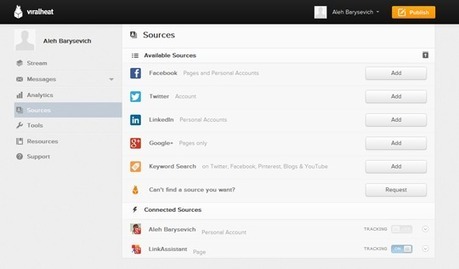
Twitter, Facebook, LinkedIn can be found in the majority of social media management apps. It is with Google+ that things get a little bit more complicated: very few social media tools support it due to some technical challenges.
However, most social media managers would prefer a solution that would allow them posting to all social networks in one place, Google+ including.
In this post, you’ll find reference to all tools that are to date integrated with Google+. We’ll bring small business editions to a special focus and review social tools that (1) support Google+ and (2) the ones you can use for free or under $10 a month. Via Martin Gysler
Robin Good's insight:
If you are looking for tools that allow you to easily share any news, image or video on all of your social media channels, including Google+, this is a useful and updated resource to reference.

Julian Magnone's comment,
April 26, 2013 3:26 PM
Thank you Wendy for the feedback. It worth to try it.
Regarding separated browser windows opened, that worked very well for me using Chrome with different user's profiles (you can also use the incognito but only allows you an additional session). If you create a different user/profile (look at the avatar on the top left corner), you can then log with many different accounts (sessions) in different Chrome tabs. 
Michlin Metals, Inc's curator insight,
April 27, 2013 2:42 PM
SMB Tactics for Smart Social Media Usage
Scoop.it!
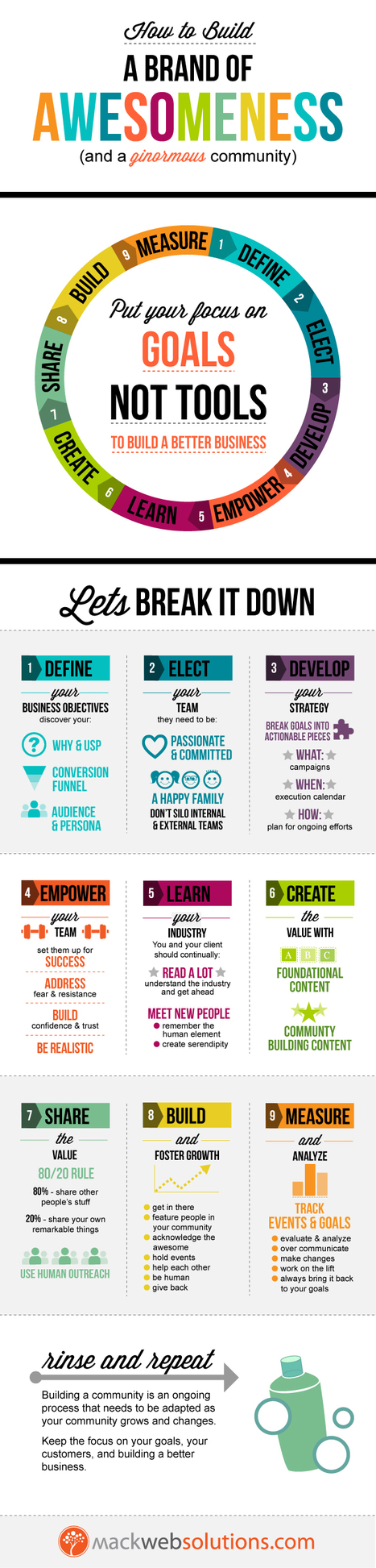
Here some very good stuff about community-building for your online business. Great points and great advice, including an awesome infographic. I recommend this content for any small business online trying to establish greater reputation and crediblity for itself, as these are in my opinion, the key winning traits of successful web companies. Excerpted from the original SEOmoz article:
Must-read. Right on the mark. 8/10
(Thanks to Pino Mauriello for having scouted it) Via Giuseppe Mauriello, Alessio Carciofi

AndySernovitz's curator insight,
May 9, 2013 9:03 AM
Here is a super awesome infographic and the play-by-play breakdown of each step in the process. ➨ Read Social Media Content Curation & Marketing Strategies articles here http://www.scoop.it/t/all-things-social-social-media-magazine
Scoop.it!
|











|
Scooped by
Robin Good
March 20, 2013 12:04 PM
|
Scoop.it!
Robin Good's insight:
If you haven't used it yet, it may be time to give PaywithaTweet a second look. The service, which is completely free, is available to anyone and it allows to give access to a link, a downloadable eBook, a music track or whatever else in exchange for a tweet or a post on Facebook.
I think this is a great way to build greater visibility and authority in your niche, while letting people discover some of your best stuff.
Free to use. (pay with a tweet to try)
Create a PaywithaTweet button now: http://paywithatweet.com/sell.php
More info: http://paywithatweet.com/
|
|
Scooped by
Robin Good
September 8, 2013 3:22 AM
|
Scoop.it!
Which WordPress marketing theme is really the best? Check out this massive roundup review, comparing OptimizePress 2.0 to all its alternatives, to find out!
Robin Good's insight:
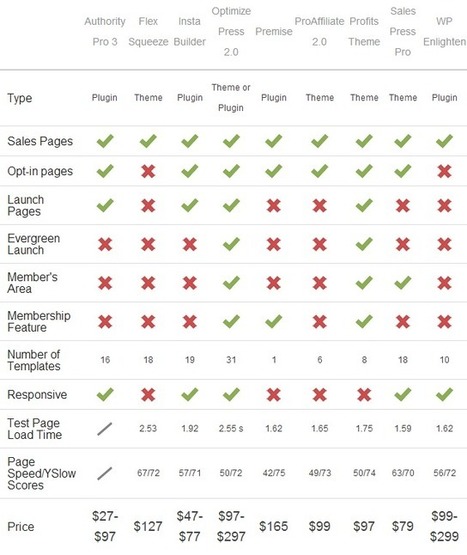
If you are looking for a landing page builder app, theme, plugin or software, I can't recommend enough this comprehensive guide by Shane Melaugh, to some of the best landing page Wordpress themes and landing page "generators" out there.
Nine different tools are closely reviewed and their pros and cons clearly identified.
Finally a comparison table and a written set of recommendations from the author provide a clear-cut view of which tools can provide the best and most cost-effective solution.
My comment: Excellent, professional reviews and objective analysis make this a truly useful guide for identifying a good landing page builder. Although several other lesser-known but quite effective landing page builders are missing from this guide (Unbounce, Leadpages, KickOffLabs, PageWiz, Lander, InstaPage among others) the information provided in this guide is priceless and can litreally save you lots of hours of research.
Good review, analysis and comparison. 8/10
Full guide: http://imimpact.com/optimizepress-compared/

malek's curator insight,
September 8, 2013 7:15 AM
Optimize Press or not?
The basic top table allude to OP, but don't make your mind until you read the whole post. A joy to go through

Kate Rieger's curator insight,
September 11, 2013 9:59 AM
Excellent round-up of review of several different landing page builders. Haven't used Optimize Press, but not inclinded as I don't need a confusing or complicated backend. I'll stick with Instabuilder.
|
|
Scooped by
Robin Good
August 14, 2013 11:29 AM
|
Scoop.it!

Today, Ebyline proudly presents an exclusive interview with John F. Doherty, head of Distilled New York, founder of HireGun, international speaker, blogger, and photographer.
Robin Good's insight:
Excellent advice, in this short but content-rich interview published by Ebyline. In it, John F. Doherty, head of one of the top SEO companies in the US, shares ten key tips about marketing, SEO and where to start, that can be of good help to new online startups.
The advice and suggestions provided are simple, straightforward and easy to read, thanks also to the good formatting style of the article.
Some of the best tips shared, focus on:
- what's the first step to take to market one's own company online
- how to create a social media following when you have none
- how to compete with established companies in the SERPs
- how to avoid the top four reasons for which Google penalizes a site
among several other ones.
Useful. Rightful. Clear. 8/10
Full article: http://blog.ebyline.com/2013/08/interview-with-john-doherty-distilled-ny-director-seo-for-startups/
|
|
Scooped by
Robin Good
July 31, 2013 2:40 PM
|
Scoop.it!
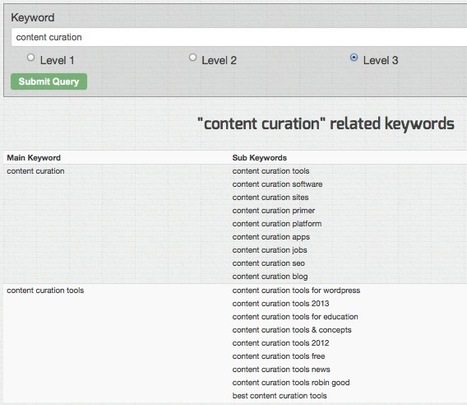
Discover valuable keyword opportunities by conducting deep research with our Related Keywords Tool. Export a spreadsheet of the related keywords and create targeted content to give your site the attention it deserves.
Robin Good's insight:
The Keyword Suggestion Finder from SEOChat is an excellent keyword - keyphrase discovery tool that can delivery useful results in a matter of seconds.
What the tool does is to list for you related keywords and keyphrases, down to three levels of depth, for ny keyword "root" or keyphrase that you will provide.
Each level expands on the preceding one by offering more specific keyphrases related to the ones found at higher level.
Final data can be freely downloaded as an .xls file.
Excellent tool for anyone doing content marketing, SEO, Google AdWords campaigns. Fast, easy, effective.
Works only in English.
Free to use.
Try it out now: http://tools.seochat.com/tools/related-keywords-tool/
|
|
Rescooped by
Robin Good
from SEO and Social Media Marketing
July 12, 2013 3:41 PM
|
Scoop.it!
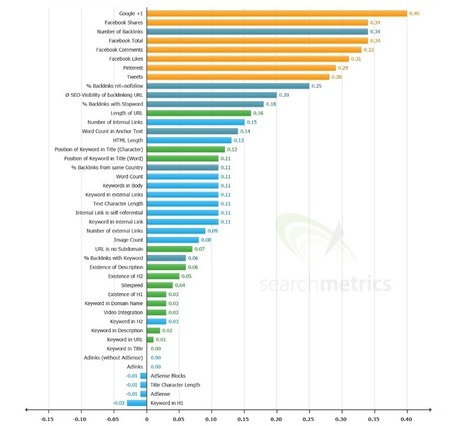
Recently, Search Metrics released a white paper on their findings for Google’s SEO Ranking Factors in 2013. It displays the correlation between particular metrics such as ‘Facebook Likes’ and ‘Backlinks’ and the rank ability of a page within Google.
Also available in the 70 page document are comparisons with 2012’s data, where that data is available. Not to many marketers surprise, a lot has changed. According to Search Metrics, it’s time to get social! In this article I graze upon some of the most important areas as well as my thoughts on what Google is playing it – for better and worse.
The data from search metrics is based on research and is not 100% factual. Nor are my opinions factual, but rather opinions and statements based on what I believe to be happening.
Via Antonino Militello
Robin Good's insight:
Time to get social. The writing is on the wall... and more than ever before data seems to confirm it.

Robin Good's comment,
July 19, 2013 3:57 PM
Yes Charise, the latest MOZ data on Google ranking factors seems to largely support what you say: http://o7.no/1988r2E excerpted from: http://www.slideshare.net/mattthemathman/moz-2013-ranking-factors-matt-peters-mozcon-24036187


|
|
Scooped by
Robin Good
June 30, 2013 3:34 AM
|
Scoop.it!
Robin Good's insight:
If you are looking for a way to become less dependent on SEO to keep your web site visibility on search engines, a new approach, promoting a radically different approach to conquer the search engine result pages, is emerging.
It is being called New SEO.
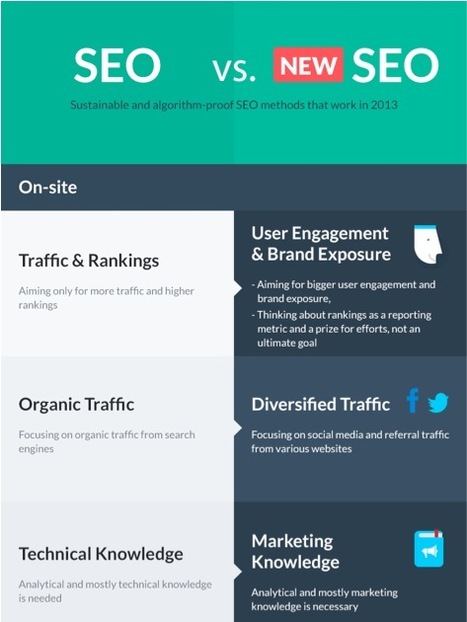
From obsessive keyword analysis and inbound linking focus the new SEO approach focuses on higher quality content and greater attention to audience engagement and relationship building.
The accompanying infographic from Positionly eloquently illustrates the key differences between the traditional way of doing SEO and the new approach.
"The old way of thinking about SEO meant that analytical and mostly technical knowledge was given an edge.
New SEO should prize analytical and mostly marketing knowledge."
Rightful. Useful reminder. 7/10
Original article and infographic: http://socialbarrel.com/sustainable-and-algorithm-proof-new-seo-methods-for-2013/52145/

Celebritize You's comment,
July 1, 2013 10:14 PM
Many of my clients are still thinking old SEO. Ugggh.

|
|
Rescooped by
Robin Good
from Curation, Social Business and Beyond
June 23, 2013 2:48 AM
|
Scoop.it!

"If you define influence by the size of your Klout score, you can stop reading this right now..."
Via janlgordon
Robin Good's insight:
Fundamentals of effective marketing: to be influential, you must be known, accepted and trusted. But, how do you get there?
Brian Clark has the right answers to this one.
(Image credit: Influential Tech)


Caroline Price's comment,
July 16, 2013 5:59 AM
yes...some people are worthy of respect; others less so...

|
|
Scooped by
Robin Good
June 1, 2013 7:45 AM
|
Scoop.it!
SEO itself has always been somewhat of a barrier to entry for online success. In other words, for a new person it's so complex that it takes a long time to
Robin Good's insight:
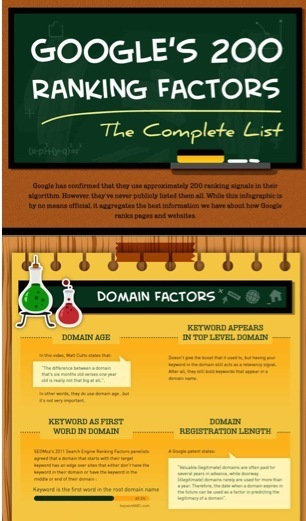
If you have long been wondering which are the most important factors that affect how your web site is ranked inside Google search results (SERPs), here is a very comprehensive infographic by Search Engine Journal which visually summarizes the top 200 variables that likely affect your Google ranking.
The factors are generally derived by referring to Google official guidelines and announcements and even more on pragmatical analysis, testing and voting by SEO experts, like in the case of SEOMoz famous "Ranking Factors" online resource.
In this case the author of the infographic (Brian Dean) unfortunately does not disclose how and from where he has pulled together the information he has so nicely curated into this infographic.
The over 200 factors presented are aptly grouped in ten areas:
- Domain Factors
- Page-Level Factors
- Site-Level factors
- Backlink Factors
- User Interaction
- Social Signals
- Brand Signals
- On-site Webspam factors
- Off-pag Webspam factors
- Special Algo Rules
These factors have been changing quite significantly over the last two years and they are continuously being improved and refined, with old ones being gradually de-emphasized, and new ones being added and increasing in importance.
Useful reference. 7/10
Full infographic: http://www.searchenginejournal.com/infographic-googles-200-ranking-factors/64316/


Lynn O'Connell for O'Connell Meier's curator insight,
September 14, 2013 12:41 AM
From May 2013, so some things may have changed...

|
|
Scooped by
Robin Good
May 3, 2013 6:22 AM
|
Scoop.it!
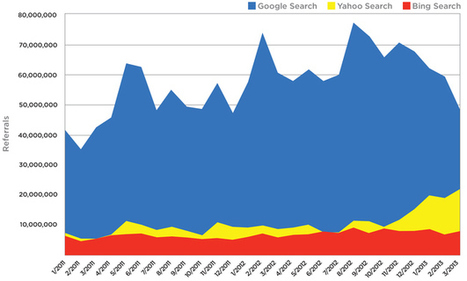
Traffic from Google to digital publishers dropped 30% over the past eight months.
Robin Good's insight:
If you keep investing time on optimizig your site for Google, or investing in link building efforts of all kinds I suggest you give a good read to this article.
Wriiten by Awini Anburajan on Buzzfeed: "Search traffic to publishers has taken a dive in the last eight months, with traffic from Google dropping more than 30% from August 2012 through March 2013...
...While Google makes up the bulk of search traffic to publishers, traffic from all search engines has dropped by 20% in the same period.
BuzzFeed tracked traffic referrals to over 200 publishers in the BuzzFeed Network, a group of sites that carry BuzzFeed's tracking code and include the Huffington Post, Daily Mail, NewsweekDailyBeast, Time, Sports Illustrated, Us Weekly, and Rolling Stone. Collectively the sites represent an audience of more than 300 million people globally.
Of the three major search engines — Google, Yahoo and Bing — only Yahoo saw growth in this period.
While Yahoo grew search traffic in this period, it sent 21M referrals to publishers in March, less than half of the 48M referrals sent by Google. Traffic from Bing dropped 12%."
And check this: "In March, Facebook sent 1.5x more traffic than Google, the greatest difference we've ever measured between the platforms. At the same time, we've watched traffic from other social platforms — Twitter and Pinterest -—continue to grow an audience and drive traffic traffic to publishers."
Are you ready for this?
Insightful. Informative. Must-read. 8/10
Full article: http://www.buzzfeed.com/aswini/where-did-all-the-search-traffic-go

Joe Wise's curator insight,
May 13, 2013 9:15 PM
Need an SEO guru to verify or dismantle this argument... anyone?
|
|
Scooped by
Robin Good
April 27, 2013 9:50 AM
|
Scoop.it!
Robin Good's insight:
Ready to take a vacation? Found your destination but do not really know what to go and visit once you are there? KLM, has a fantastic, personalized solution that positions the company as a point of trusted reference for whoever wants to find out what's best to pay attention to, at any travel destination.
The initiative, which due to its success has become a permanent KLM offering, offers the ability to anyone using it, to invite his social media friends who have already been at your next detsination to contribute places, events and spots to visit once you get there.
All of their suggestions are printed on a unique, personalized journey map that KLM sends physically to you, and that showcases all of the suggestions and tips of your network of friends, nicely integrated with the map of your destination.
N.B.: Must see Maps cover only KLM official detsinations.
"...perfect solution to collect and organize the best things to see and do at your destination."
More info: http://mustseemap.klm.com/ot_en/create-map/intro
FAQ: http://mustseemap.klm.com/ot_en/q-and-a
Original video: http://youtu.be/dosrsAy4ENY

giusy.barbato's curator insight,
April 27, 2013 10:43 AM
Un esempio concreto di come creare contenuto utile per un bisogno del tuo cliente
|
|
Rescooped by
Robin Good
from Online Curating & Social Learning Tools and Applications
April 23, 2013 2:13 AM
|
Scoop.it!

..round-up of the various tools that helped users manage their Twitter accounts by finding who to follow, following new people, unfollowing many people at once and organizing groups of users they follow into lists.
Via Frédéric DEBAILLEUL, Rui Guimarães Lima, Maria Margarida Correia, Heiko Idensen
Robin Good's insight:
If you are looking for tools that can help you cleanup, and unfollow useless or unworthy people, here is an updated list of the best free tools you can use for this task as many have shut down since Twitter latest API update.
No longer functional are Untweeps, Just Unfollow, Twit Cleaner, Who Follows Whom and Tweet Effect.
Useful. 7/10
(Image credit: TimeandDate.com)

Samuel Pustea's comment,
May 26, 2013 7:57 AM
Oh, yes ManageFlitter is included in the list! I love that tool, I am even paying for the pro version. It's that good. All the other tools are great! Shared to Pinterest, G+, and Stumbleupon.

Mott Marvin Kornicki's curator insight,
May 26, 2013 10:01 AM
Twitter Tools are great to sort, organize and improve our twitter presence!

Dillon Thomas's curator insight,
June 7, 2013 12:55 AM
Managing Twitter ..to make it an effective tool, creating groups . understand who is following you who you should follow... All things Twitter
|
|
Scooped by
Robin Good
April 14, 2013 8:51 AM
|
Scoop.it!

Robin Good's insight:
Jake Sorofman, Research Director at Gartner, highlights in his blog the key traits of effective online communication:
1) It’s human: it speaks with a conversational voice, from one human being to another. Thought isn’t hidden behind stilted corporate speak, chest-thumping claims and pompous language.
2) It’s neutral: perhaps not wholly objective, but it holds fire on the hard sell in favor of issues-centric storytelling that supports a brand’s point of view without always making the brand the hero.
3) It’s simple: attention spans aren’t what they used to be and competition for that limited attention has reached a fever pitch.
4) It’s visual: It’s also easier to consume when you’re already up to your eyeballs in dense text.
5) It’s curated: you don’t have to create all of your own content. Leverage happens when you organize and annotate third-party content that helps tell your story or sell your point of view.
6) It’s conversational: communities talk back to sustain the dialogue in the form of comments, reviews, ratings and new content of their own that defends or argues against your point of view.
7) It’s organic: it’s published fast, often in response to unpredictable moments."
My comment: I think that most of these seven points are pretty accurate though I personally do not think that being neutral and simple are always strengths when it comes to effective online communications.
I guess it depends on the situation, but, in my humble view, I will likely favour more companies and individuals that a) take a stand and a side on important issues and b) that are not concerned with providing simple, superficial, easy-to-consume content.
Being organic, as intended here, is also something that in my eyes will not be a key absolute advantage point for companies, but it can definitely be in many cases a plus point.
Good points. Rightful. 8/10
Original article: http://blogs.gartner.com/jake-sorofman/forget-big-data-here-comes-big-content/
Gartner's 2013 Social Marketing Survey:
http://www.gartner.com/technology/research/digital-marketing/social-
(Image credit: Creating content - Shutterstock)


Victoria Garcia, EAI Marketing Director's curator insight,
April 16, 2013 10:45 PM
The more I read the more overwhelmed I get...but this clears a lot of it up. If you can just hold these ideas in your head, it will take you a long way. - Vic

Gail Worthington-Eyre's curator insight,
April 22, 2013 10:00 PM
Conversation with the consumer is the key and framing your content to deliver good conversation is vital to social marketing success.
|
|
Scooped by
Robin Good
March 16, 2013 3:12 PM
|
Scoop.it!
What does it mean for online content to "go viral"? An analysis of almost a billion information cascades on Twitter news, videos, and photos has produced the...
Robin Good's insight:
ViralSearch from Microsoft Research Labs is a new means to navigating, searching, content that spreads over social media.
ViralSearch visualizes how stories get distributed and how they virally get spread online.
From the official site: "An analysis of almost a billion information cascades on Twitter news, videos, and photos has produced the first quantitative notion of whether something has indeed gone viral, thereby enabling further research into topic experts, trending topics, and viral-incident metrics."
A fantastic tool, but still in its testing phase.
Hope it will soon be available to many.
Original video: http://youtu.be/wSwOszoHuoI
Download video: http://msrvideo.vo.msecnd.net/rmcvideos/185452/dl/185452.mp4







Peep Laja, a conversion optimization expert at Markitekt, has an excellent illustrated guide at ConversionXL guiding you through over 20 of the most common mistakes made when designing landing pages.
For each issue Peep provides a real-world example with a screenshot and relevant commentary at what you should pay attention to.
Instructive. Good curation. 8/10
Full guide: http://conversionxl.com/21-ways-youre-screwing-up-your-landing-pages-and-what-to-do-about-it/#.